the internet of things (ioT): keys to the company of the future
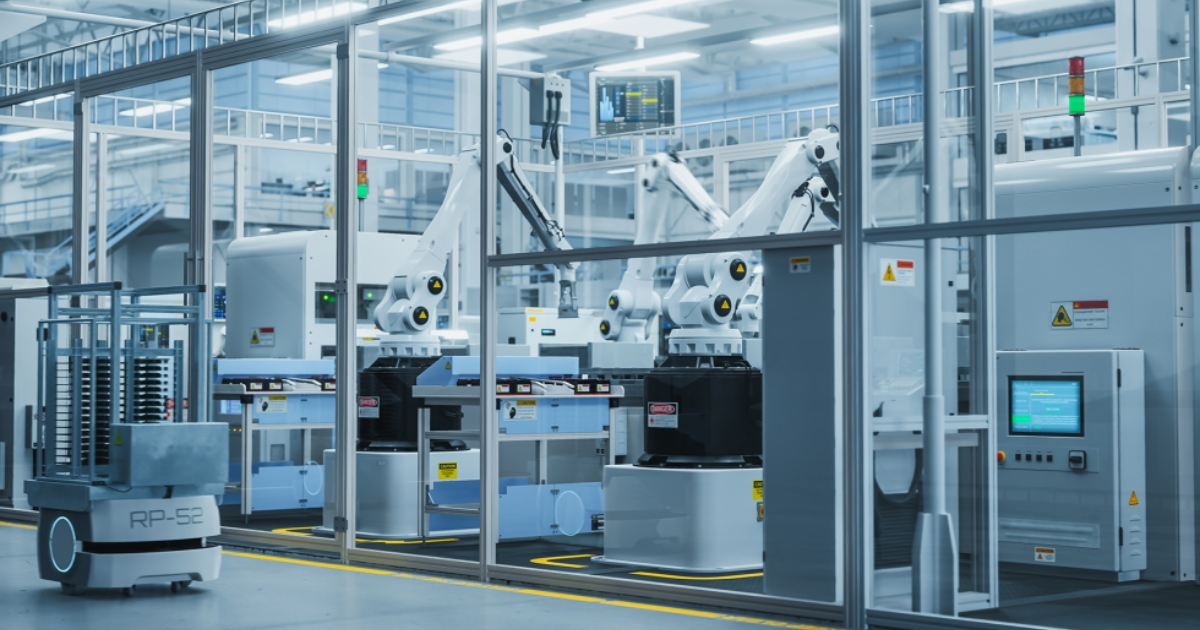
Digital transformation has long since come to the company to stay. Concepts like the factory 4.0, the Fourth Industrial Revolution or Industry 4.0 They are part of the new business vocabulary that promulgates a self-organized production in factories and industries through the latest technologies.: digitization, interconnectivity and management of large volumes of information in process automation.
An example of this new technological era materializes in the well-known Internet of Things (idC), in English Internet of Things (IoT) in which different devices and equipment are interconnected via the Internet in a digital way, offering data in real time with which to improve the present of the users, such as replenishing food that has run out in the fridge.
History of the Internet of Things
The concept of the Internet of things (idC) It was first used by Kevin Ashton in the year 1999, in research on network radiofrequency (RFID) and sensor technologies, under the Massachusetts Institute of Technology (WITH).
It is an advanced connection of systems, services and devices beyond the traditional machine-to-machine connection, which is also known as the digitization of the physical world.
The Industrial Internet of Things
The Industrial Internet of Things is a subcategory of the Internet of Things., that contemplates applications for the Industry 4.0 or the Factory 4.0, o, which is the same, for the fourth industrial revolution. In her, machines and devices transmit data over the Internet and are managed through software. The process is carried out by sending data by machines connected to the Internet, that process advanced analytics platforms.
Applied to industry, the internet of things, the interconnection of machines and production processes allows the following advantages
- Monitor manufacturing
- Offers more effective and efficient solutions
- Promotes greater competitiveness at the market level
- In the production, increases strategic speed
- Monitor the relationship with the customer
- Optimizes mechanized production processes
- Allows access to the global market
- Promotes sustainability
Forecasts for the year 2020
It is expected that in the year 2020 exist of 22.000 a 50.000 millions of wireless devices connected to the internet, offering real-time data, with the aim of offering users a multitude of intelligent services and applications related to the Internet of things.
In this way, work is being done on a new generation of Internet applications on the IPv6 protocol to identify objects immediately through a code, which is currently not allowed by the IPv4 protocol.
The implementation of the RFID system (radio frequency identification acronym in english), will allow processing and transmitting information from any object that contains one of these chips (tags and readers). Readers identify RFID tags using radio waves, being able to be read by numerous readers at the same time and at a greater distance than traditional UPC codes.