The value of IoT data in the Industry 4.0
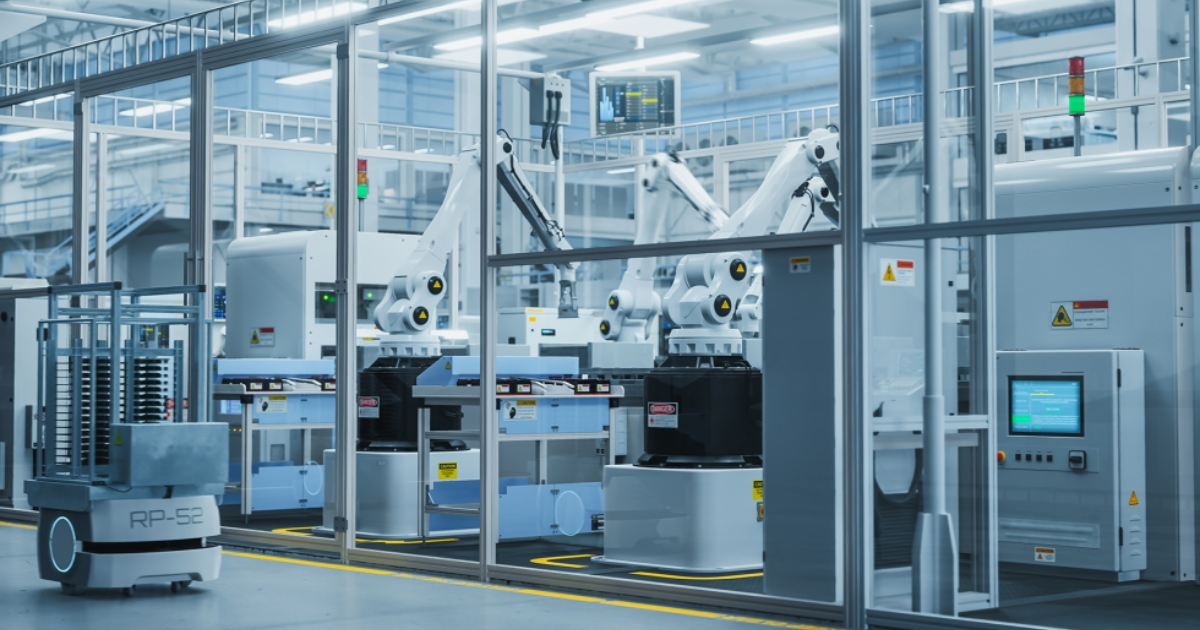
The Spanish industry is immersed in the transition of the Industry 4.0. A revolution that machining companies have started, as a result of the crisis generated by the Covid-19, for the implementation of automation and digitization systems that guarantee their survival in the market. Y, of all technologies, the one that has gained the most relevance is, undoubtedly, the Internet of Things (IoT) and the importance of data storage and management in assembly lines.
Traditionally, transition periods are translate into investment opportunities, to improve production systems and position yourself against the competition. In this context, industry in general and machining companies in particular, maturely assume the industrial revolution 4.0. a necessary change, but what, at the same time, generates several tendencies that contribute, directly, in process improvements and productive yields.
However, It is important to analyze the needs of each of the organizations, for implement the most appropriate automation and digitization systems for each application industrial. In this way, one of the most outstanding investments in this transition of the Industry 4.0 es collect and form data obtained from Internet of Things networks (IoT) and industrial equipment for the Internet of Things (IIoT) as part of assembly lines and PIMS, as well as controlled operations that connect their servers around the world.
Besides, with the gradual adoption of 5G, Artificial intelligence (IA) and machine learning (ML) become promising technologies that have a long way to go and are expected to prosper in the coming years. It is important to know the new industrial technologies, which are the most appropriate to implement in the production chain, but also how the enormous amounts of data that will be generated can be processed and stored.
Development of operations of companies in the Industry 4.0
It is a reality that the way we communicate has changed in the last year, due, partly, to the social and mobility restrictions that this transition has accelerated. In this way, the industry 4.0 clearly demonstrates the constant evolution of the way business is done and many companies rely on automation and the collection and maintenance of data records, to perform routine operationsa. With the arrival of 5G, this trend will be promoted, providing greater speed and power, for the perfect functioning of the latest generation connected and interoperable devices.
This evolution will contribute to increasing the data required during processing, thus ensuring that computing power will move ever closer to end devices and local data centers, to reduce the load as much as possible. Then, Is data storage going to be the key to the success of the Industrial Internet of Things? (IIoT)?
In this way, the smart technology increases business efficiency and productivity processing and analyzing data at speeds never before available. The industry 4.0 is a reflection of how technology is transforming the way companies operate, but above all how to develop this potential on the latest technological solutions.
However, there are determining factors for the proper functioning of hyperconnected devices in any industrial application. And it is that, certainly, environmental conditions affect connectivity, including data storage. Just as important is choosing storage equipment, but companies must consider a variety of external factors to solve these obstacles in terms of altitude, humidity, air temperature and vibration loads.
Besides, los storage requirements are very demanding in terms of security, storage and processing power, for the proper functioning of the automated production line. In this way, read and write intensive applications rely heavily on the reliability and resilience of a storage solution that must be able to write data over a long period of time. In fact, all devices must be trusted, so that limited maintenance is required for installation and proper operation.
How to control data in the Industry 4.0
When it comes to controlling data, several questions arise. How is this tracking done?? Who has access to this data and how often? In the context of the recent development of on-premises data centers, physical access and maintenance of data centers and IIoT devices does not always seem to be practical. In these conditions, the remote control of the status of storage devices becomes important for maintenance periodic and the prevention of unnecessary problems.
In the same way, data retention for a long period of time is often useful, for the elaboration of internal reports of the companies as a tool for the strategic decision making. However, if a business processes and maintains records of critical data, these data must be kept for a long period of time, both to meet regulatory requirements and to reduce potential errors.
The technological transition of industrial companies and data management, for the proper functioning of the production chain in digital environments, will contribute to a greater control of the process, anticipate errors or system incidents, more quickly, and get, definitely, perfect operation and maintenance. Industry transition 4.0 it is a reality that will allow machining companies to improve their production performance and maintain their competitiveness in an increasingly global market. Innovation can be the key to success, since the economic recovery will come sooner or later, but the question is, are organizations ready for this moment??