Digitization in the industry
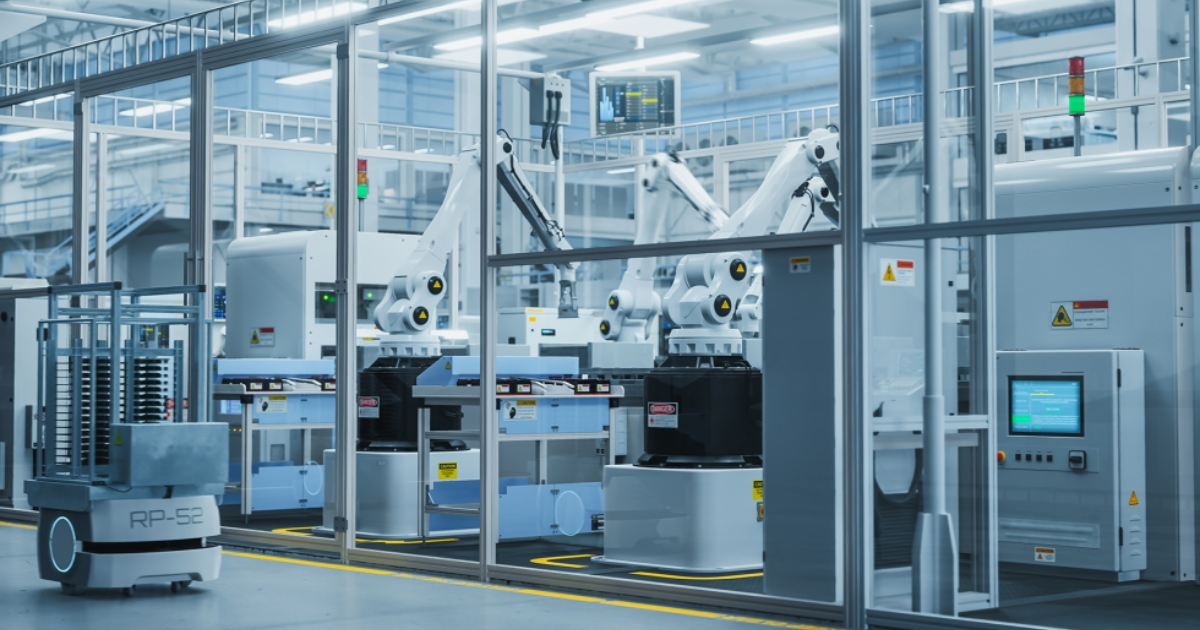
digitization, networks and virtualization are concepts that we encounter more and more frequently, also in the business world. What do these terms mean specifically?? And what do they imply in a workshop?? Digitization plays an essential role from the process level to the factory network, as can be seen in both small and large companies that work with sheet metal. As with many ideas around the Industry 4.0, the objective is to encourage greater use of the machine, higher product quality or, simply, an increase in productivity.
In the production of the future, the traditional world of production processes will be connected and optimized through a smart software. To get it, companies will record process data, machines and products, from order acceptance to production and delivery. This transfer of data from the real world to the virtual world is what we call digitization. According to Gartner, digitization is “the use of digital technologies to change a business model and provide new revenue and value-producing opportunities; is the process of moving to a digital business”.
As part of digitization, the virtualization describes in detail how individual processes are mapped on a computer. Thanks to sophisticated software, data and measurement values of processes and products can be collected and entire processes can be simulated. Physics, engineering and business management combine to achieve different goals: even before actual production, process and product variants can be tested and optimized. Later, processes are followed and evaluated on a large scale to, on the one hand, have up-to-date data on production and, for another, calculate trends for the future as accurately as possible.
An important model in this context is the digital twin. This concept describes the virtual image of a real product (the process, machine, service). The digital twin of a component is assigned the respective measurement data of the actual component during all production steps. The result is a data set (along with a digital name tag of the component) allowing detailed traceability.
When process data and product data are combined, processes can be monitored and optimized. In case the process values deviate from the defined theoretical values, it is possible to react immediately and modify individual process parameters accordingly. These process parameters may have been previously defined; then, coupled sets of product and process parameters are stored.
Horizontal networking
The horizontal networking refers to the mapping of a complete production line with all its processes and data. On the contrary, the vertical networking refers to the network connection from the individual process to the machine, to the production cell, to the production hall and, finally, to factory network. For example: if a process has to be corrected due to changed material parameters, in the vertical network the corresponding data set can be exchanged on all machines carrying out the same process on the same batch of material in the factory network
digital transformation
The digital transformation is the process of change that occurs when digital technologies are introduced. In the process, completely new business models can be developed, such as purely digital business models and digital value creation networks.
Digitization at all levels
Digitization in industry is closely linked to the concept of Industry 4.0 because it is about theintegral digitization of industrial production”. It is used to detect deviations in production more quickly and find solutions to them. Besides, digitization helps industry to optimize their manufacturing processes through virtualization and further standardization.
To make the most of the benefits of digitization, it is recommended to introduce it at all manufacturing levels: Begins with order processing and continues through actual manufacturing, where all process data is collected and can be tracked for each part. The objective is optimize productivity, as well as the traceability of each individual production step for each piece. Optimization can also be automated, for processes to regulate themselves.
But digitization also has clear advantages beyond the confines of the factory.. As mentioned in vertical networks, factory networks can gain new benefits from standardization and its economies of scale. Besides, plant manufacturers can monitor the operating data of their machines at the customer's premises (‘Condition Monitoring’) and help remotely in case of maintenance need, o predict the expected maintenance for the client through parameter trends ('Predictive Maintenance').
A good example of the possibilities of digitization in the industry can currently be seen in the field of 3D printing.. Over there, product development and production are often completely separate and production is sold as a service. Dassault Systemes offers a software environment in which it is not only possible to perform simulations and virtual tests of the products, but also evaluated suppliers can be contracted for production on their 3DExperience platform. Individual steps are modular, but continued digitization on a uniform platform allows, however, an efficient and profitable economic activity.
Total control in the welding process
In the International Congress of Laser Technology AKL'18, Michael Ungers from Scansonic MI GmbH explained how digitization works at the process level. “From teaching to seam inspection, We can document every weld on every component on video and with a complete data set.”. Scansonic builds laser processing systems for laser welding. With its SCEye camera system, offer an integrated solution for process control, both for welding processes with tactile wire guidance and for remote welding. for each component, the software records both process parameters (laser power, wire feed, etc.) as the movement of the axis of rotation [rotation axis position] or the crimping force of the cable. Besides, the bonding area is videotaped.
Camera images taken before and after the process are edited in real time. For example, these images can be used to identify obstacles before the process starts or interruptions during bonding. Once the process is finished, the camera also monitors the cooled seam and can clearly identify seam defects (for example, the pores).
There is a lot of technical knowledge in the software. For it, Scansonic analyzes large amounts of test data sets. With the help of machine learning approaches, generates and optimizes the algorithms for the corresponding application. The user receives the algorithms as a software update and only needs to fine tune by setting a reference track.. As a result, influences of materials and product properties can be taken into account. The long-term goal in this case is further optimization in order to generate a self-learning machine..
When testing the camera system, Scansonic checked some 20.000 welds with a total of 69 defects (defects > 2 mm). All errors were reliably found. The rate of 'false negatives' was 1,1%. These are display errors that are still acceptable.
It is also interesting to monitor the process and machine parameters: warning values and limit values for manufacturing tolerances are set by the user before processing. The control software shows in real time if the produced parts are within the tolerances (verde), are in the warning range (yellow) or are unacceptable (rojo). Not only can the rejection rate be precisely controlled, but the system can also identify process problems in real time. This way, further damage to the processing machine can be avoided.
Sheet metal work of the future
Trump card, in Ditzingen, Germany, has been working on new concepts for sheet metal working for quite some time. in the plant, visitors can see the 'Sheet Production Unit' in a manufacturing hall. You walk through the five stations—from receiving the order to delivering the parts—and you can get more information about the status of the work on the big screens.. During a visit to the last Intech internal exhibition, it could be seen that they present real data: at 3 am, a piece of sheet metal had gotten stuck in the warehouse, so the machine had obviously stopped.
And that's what digitization in production is all about: to optimize capacity utilization, detect and eliminate interruptions in a timely manner. Even during the planning of the production unit, the company identified bottlenecks and optimized processes through simulation. “Our vision is the autonomous factory”, says Dr.. Heinz-Jürgen Prokop, CEO of Machine Tools and Trumpf. “Our goal is the step-by-step automation of both order processing, that in the future it will be paperless and without interruptions from the media, as of the value chain, about which we require full transparency at all times”.
In the production, Trumpf is based on a continuous horizontal network. for customers, some of which are significantly larger than Trumpf, the Ditzinger-based company also offers extensive possibilities for vertical networking. Data acquisition starts at the bottom of the process. At the higher levels, data is increasingly aggregated. The goal is to optimize the process, even beyond the limits of the site. The customer decides what data is transferred to whom.
In most cases, process data remains in the respective company, while the operating data of the individual machines can also go to the manufacturers, like Trumpf. There, data from as many machines as possible are collected and evaluated.. Changes in individual systems, but also in complete model series, are pursued as 'condition-based services'. Short term, companies can react to critical conditions, to some extent even before they occur.. Long-term, the experience can be used for the benefit of all users.
laser marking: fine control of the presses, constant traceability of bodywork parts
Steel coils up to 40 tons of weight and about three kilometers in length (the so-called coils) are cut into pieces in the press shop and then formed into body parts. plate thickness, the firmness or degree of greasing is not the same at all points of the coil, Characteristics that can cause cracks during forming in the case of bodywork parts that are particularly stressed. This is where a Smart Data Analytics application works at the BMW Group in Regensburg. Each blank is laser marked with its own identification code. In the future, this ID will allow the press to match the characteristics of the blank: If required, the ID can include a control command that activates additional lubrication of the blank before it is formed in the press, for example.
Thanks to a clear marking, the blank can be identified at any time. Thus, each body part is assigned information that remains available through the following manufacturing steps until the finished body.
The planning specialists of the BMW Group are already using the traceability of all parts to optimize the process by means of additional algorithms.. So, taking into account the measured properties of each body part, the company can further optimize the dimensions of the hollow of the finished body, or better tailor the paint application to the individual body surface. already today, fine tuning of the press parameters has a clear effect on the properties of the blank: the number of rejections has decreased significantly; the degree of material utilization of a coil has continued to increase. This way, system downtime required for defect analysis can be reduced.
Christian Patron, Director of Innovations and Digitalization at the BMW Production System, Explain: “Con Smart Data Analytics, we are setting new standards in our production system. We combine the experience of our employees with the new possibilities of efficiently processing large volumes of data to obtain accurate forecasts and proactively optimize processes.. This accelerates the continuous improvement of the production system in accordance with the basic principles of lean manufacturing”.
Fuente: Interempresas writing